Self-Paced Online Course

Harmonic Exploration RoadmapA Simplified Guide to Harmony

A simplified, practical approach to understanding harmony and learning to express yourself through it. Break out of relying on chord progressions, and start writing your own.

  • Understand diatonic harmony, scales and modes without the confusion
  • Harmonize any melody you can think of, simple to complex
  • Learn the modulations and borrowed chords from your favorite soundtracks
$199$49
Arn Andersson

Taught by Arn AnderssonArn is a music producer and composer. His work has amassed nearly 100M streams, placements with Disney, Universal, Warner Bros and Netflix, and collabs with artists like Metropole Orkest and Hardwell.

Harmonic Exploration Roadmap trailer
4Modules
39Lessons
7hOf content
21Day guarantee

Instant access · Lifetime access · Study at your own pace · 21-day guarantee
Harmonic Exploration Roadmap course preview

Break out of your harmonic comfort zone.

If you feel stuck using the same chord progressions over and over, and wish you could mimic the harmonic changes and developments you hear in your favorite film scores, this is for you.

Most of us learn harmony as a set of memorized phrases. A handful of progressions that work, reached for again and again, without really knowing why they work or what else was on the table.

That's why I made this course. Harmony is a language, and once you have the grammar and the vocabulary, you can form your own sentences instead of repeating other people's.

An intuitive, practical way into diatonic harmony, scales and modes, without feeling confused.

Understand Harmony
Harmonize Any Melody
Escape Chord Progressions
Find Your Own Sound
The Roadmap

Course modules

Four modules, from the building blocks of harmony to putting it all to work inside a real composition.
1
Module 1: An Introduction To Harmony
Module One

An Introduction To Harmony

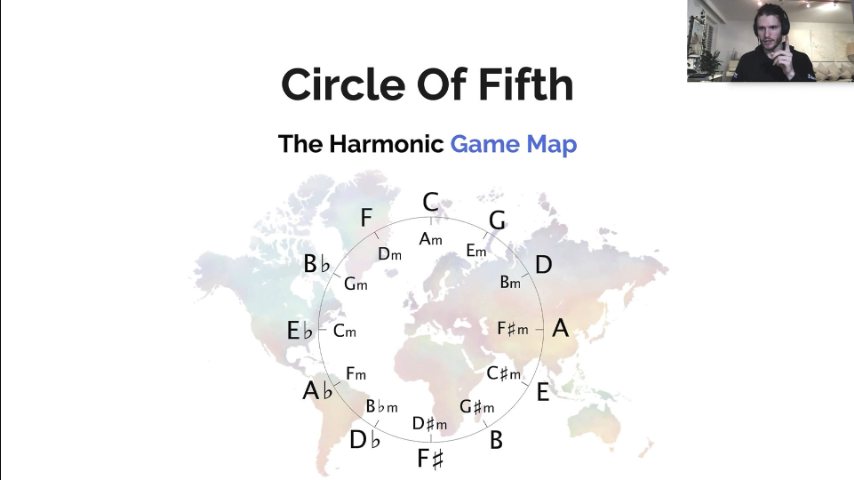
A deep introduction to the world of harmony, understood from the ground up. We establish harmony as a language, and learn the building blocks that make up its grammar and vocabulary, so you can form sentences on your own instead of using memorized phrases. Everything from fundamental harmony to modes and scales, and everything in between.
2
Module 2: How To Harmonize Melodies And Themes
Module Two

How To Harmonize Melodies And Themes

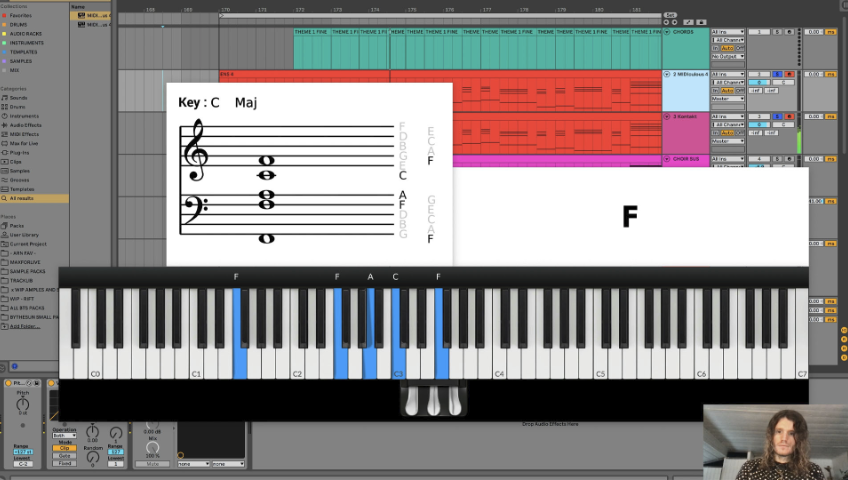
A variety of ways to harmonize melodies, from the most simple to a bit more complex. You'll learn the choices you face, how many options you really have, and how to navigate those decisions while you're in the middle of composing.
3
Module 3: Borrowed Chords and Advanced Principles
Module Three

Borrowed Chords & Advanced Principles

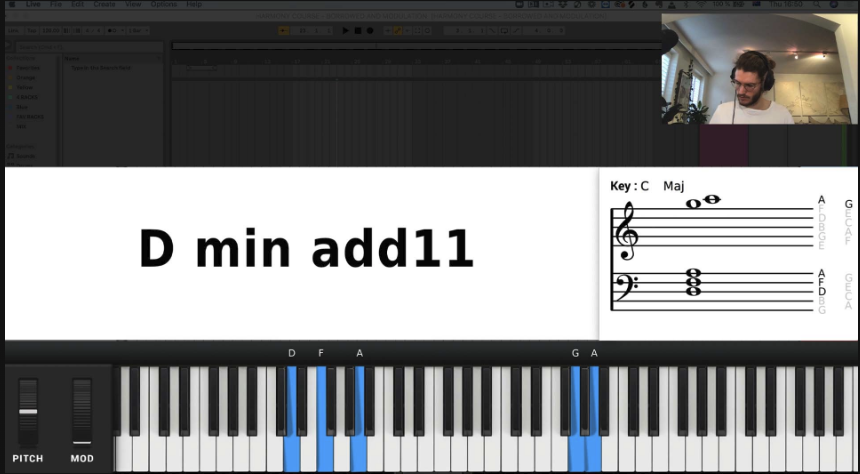
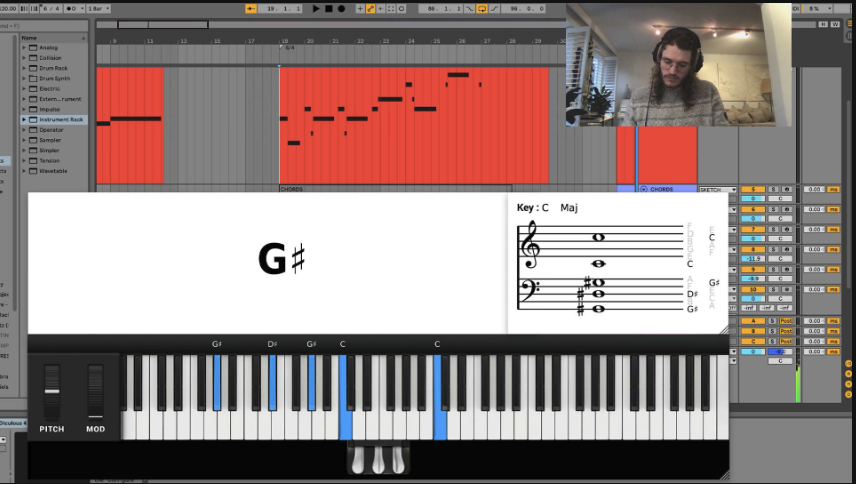
Deeper into the advanced topics. How to modulate and use borrowed chords in an intuitive way that doesn't feel forced or unnatural, plus modal interchange and chromatic mediants. These are the principles behind more interesting, professional sounding themes.
4
Module 4: Harmony In Action
Module Four

Harmony In Action

Putting all of it to work on actual themes and compositions. We break down an existing piece and analyze its harmonic movements, tying it back to everything from the previous modules, plus a look at my workflow for trying out different harmonic solutions to a single idea.

Hear from our students

Thousands of students love these courses. We know you will too.

Jimmy Van Nguyen

"It opened my eyes to what possibilities are out there."

I'd always wanted to harmonise beyond the diatonic chords, but what I knew wasn't hitting the emotions I wanted to convey. The depth Arn goes into has armed me with a different thought process for how I want to tackle harmony.

Jimmy Van Nguyen (Composer)

Anna Gerasimova

"The methods of this course have been really liberating."

Clear ideas and exercises on how to change keys, modulate, and when to use borrowed chords — everything I wanted to know when I signed up. Writing music is so much more exciting and versatile now.

Anna Gerasimova (Film Director & Composer)

Why I made this course

Most of us end up with a handful of progressions we trust, and reach for them over and over. It works, and it's also a very small room to live in.

I wanted to show an intuitive and fun way to approach the world of harmony, so you deeply understand diatonic harmony, major and minor scales, and modes, without feeling confused. Then master inversions and chord voicings to write stunning harmonic passages.

But most importantly, this is the foundation for going out further into harmony on your own, exploring everything it has to offer, and over time curating your personal expression and your own sound.

Let's get started.

Your course instructor 👋

Arn Andersson

Arn Andersson

Composer & Co-founder of Evenant

Arn is a music producer, composer and musician. His work has amassed nearly 100,000,000 streams, and has found its way into advertising campaigns for companies like Disney, Universal, Warner Bros, Paramount+ and Netflix. He's worked on feature films and video games, created custom sound design for Hollywood trailers, and collabs with artists like Metropole Orkest and Hardwell.

The full roadmap. Lifetime access.

$49 right now.

  • In-depth lectures & walkthroughs
  • Downloadable resources
  • Access to the Evenant community
  • 21-day money back guarantee

You can get started with very little. All you really need is a DAW like Ableton, Cubase, Logic, FL Studio or Studio One, and a computer that can handle it.

Love the course or don't pay, it's that simple. We don't want any unhappy students. If we didn't meet your expectations, get in touch within 21 days of purchase, and we'll give you every penny back, no questions asked.

Frequently asked questions

No. We start from the ground up and build the vocabulary as we go. If you already know your way around scales and chords, you'll move through the early material faster and spend more time on borrowed chords, modal interchange and the harmonization methods.

Those cover the harmony you need to finish a cinematic track. This goes properly into harmony as its own subject, so you can build progressions nobody has handed you.

How does lifetime access sound? After enrolling, you have unlimited access to this content for as long as you like, across any and all devices you own.

You can get started with very little. All our courses require a computer and an internet connection, and for the music courses you'll want a DAW (like Ableton, Cubase, Logic, FL Studio or Studio One) and a computer powerful enough to handle it.

A piano or MIDI keyboard makes the exercises easier, but isn't required. Anything beyond these basics is up to how much you want to invest in gear and software.

Yes. As part of the Evenant platform you get access to private groups where you can get feedback on your music from other students and professional tutors, or ask questions about the industry. You can use our Discord as well, where we're active daily.

Enrollment is a one-time payment of $49 for lifetime access. No subscription, no recurring charges.

Loyalty students and Evenant Ultimate members receive a discount code by email. If you haven't received yours, reach out to support@evenant.com and we'll sort you out.

We have a very strict policy that we only want happy students. That's why we give you 21 days to try the course completely risk free. If for any reason you're not happy in that window, let us know and we'll give you every penny back, no questions asked.

Head to our support page and we'll get back to you.